In public service—whether you wear the badge in law enforcement, serve behind the walls in corrections, respond to emergencies in fire and rescue, or answer the call in dispatch—you are trained to run toward chaos while everyone else runs away.
Every shift, you make tens of thousands of split-second decisions. Research shows that 90% of those decisions are driven by emotion rather than logic.
When the weight of the job builds up over months and years, even the strongest professionals hit a wall. November is a time when many reflect on gratitude, family, and connection—yet for first responders and public servants, the holidays often magnify stress, isolation, and exhaustion.
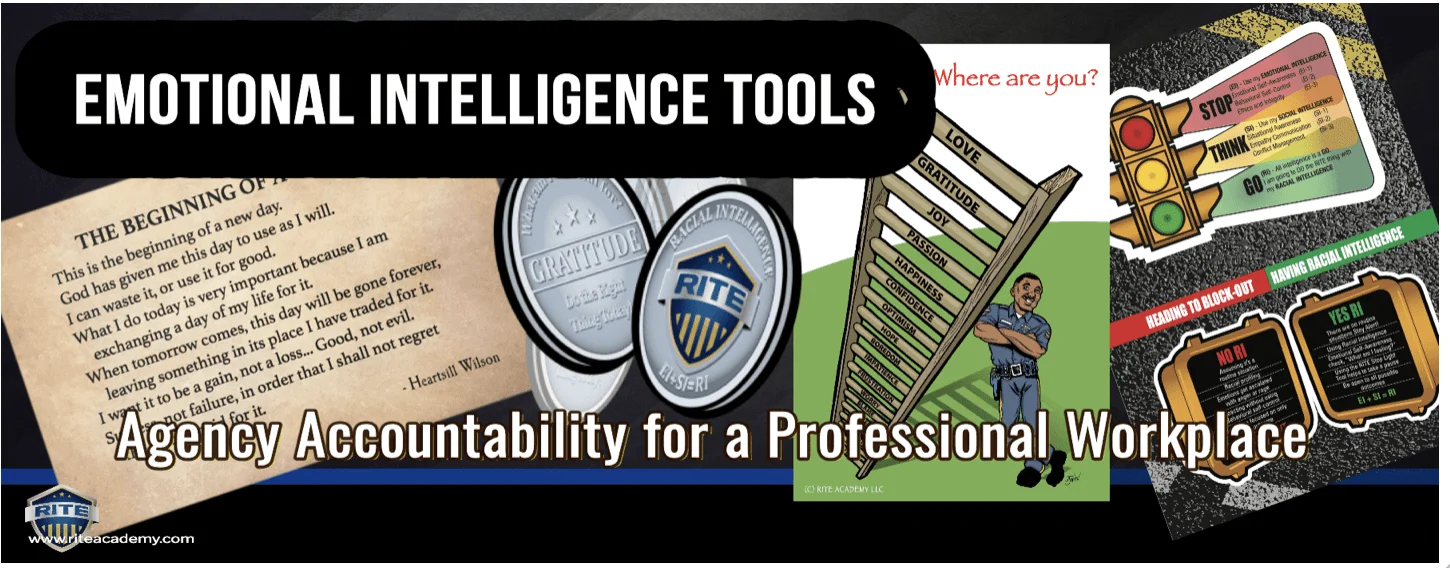
At RITE Academy, our core philosophy is simple: Emotional Intelligence (EI) + Social Intelligence (SI) = RITE Value. Emotional Intelligence isn’t “soft” training; it is tactical survival gear for your mind, your career, and your relationships. When you are at your lowest point, EI gives you the self-awareness and tools to recognize the warning signs before cumulative stress destroys what matters most.
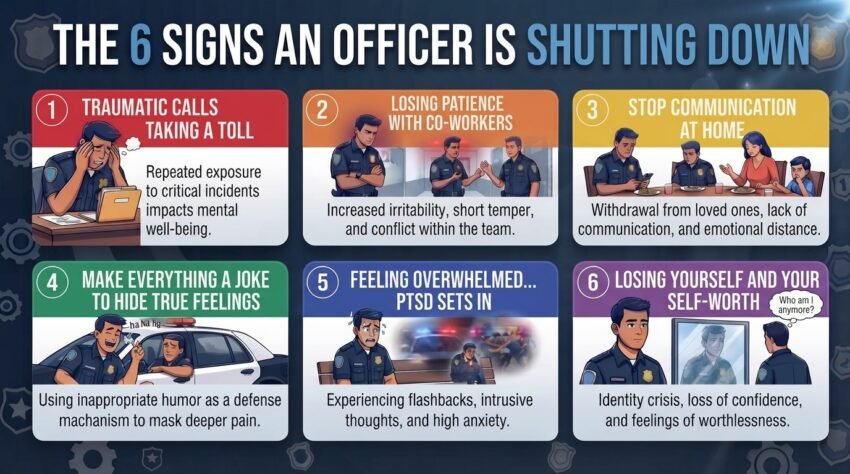
Here are 6 critical warning signs that the job is taking a toll—and how Emotional Intelligence helps you pull back from the edge.
1. Traumatic Calls Taking a Toll
You cannot witness human tragedy, violence, and crisis day after day without it leaving a mark.
Cumulative Career Traumatic Stress (CCTS) doesn’t happen from one single shift; it builds silently call after call until your nervous system stays locked in high-alert mode long after you clock out.
EI Reset: Emotional Self-Awareness teaches you to check your internal “emotional temperature” before and after critical incidents. Instead of stuffing trauma down and pretending you are unaffected, EI gives you permission to acknowledge the impact, utilize cognitive imprint wellness tools, and decompress intentionally before heading to the next call or driving home.
2. Losing Patience with Co-Workers
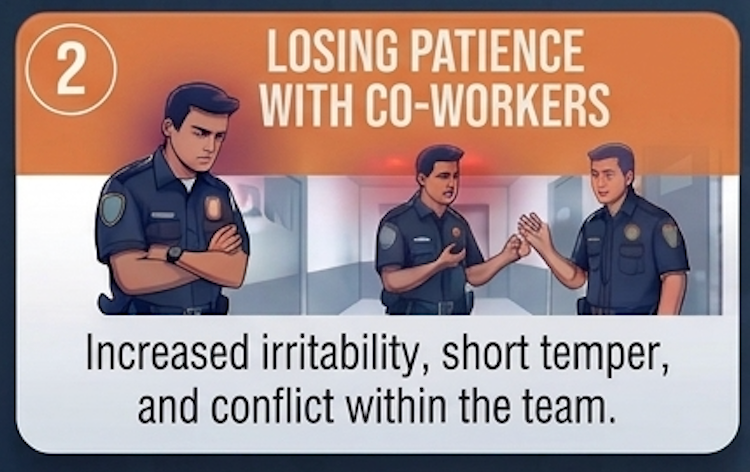
When your internal bandwidth is maxed out, the smallest friction at the station, facility, or precinct can trigger an outsized reaction.
Snapping at a partner, engaging in toxic banter, or losing your temper over minor administrative frustrations are classic signs of emotional depletion.
EI Reset: Behavioral Self-Control reminds us of a foundational RITE principle: No one can actually make you mad. You own your emotional response. Pausing for just a few seconds to recognize that your frustration is coming from exhaustion—not your co-worker—allows you to pivot away from negative banter, de-escalate internal friction, and protect unit morale.
3. Stopping Communication at Home
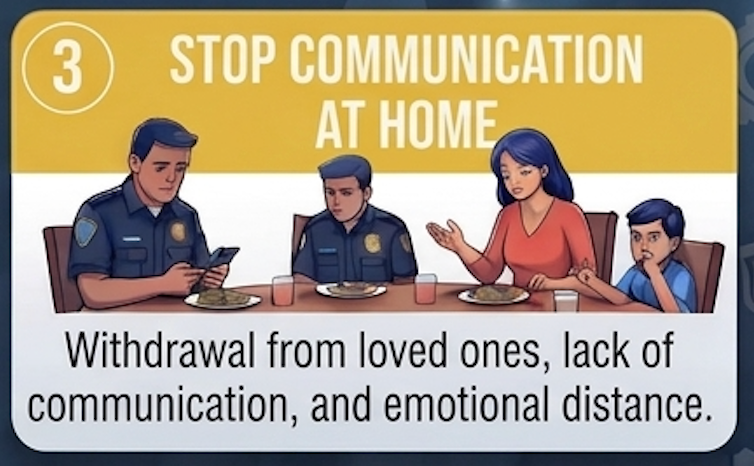
After spending 12 hours talking people down, taking reports, or managing high-stakes environments, the last thing you want to do at home is talk.
You give one-word answers, retreat into silence, and put up a wall to “protect” your family from the dark things you see on the job. Over time, that silence turns into distance.
EI Reset: When you improve the person, you improve the home. Emotional Intelligence bridges the gap between the uniform and your living room by giving you the words to communicate your boundaries without shutting loved ones out. Simply saying, “I had a heavy shift and need 30 minutes to decompress before we talk about dinner,” replaces cold silence with honest, healthy connection.
4. Making Everything a Joke to Hide True Feelings
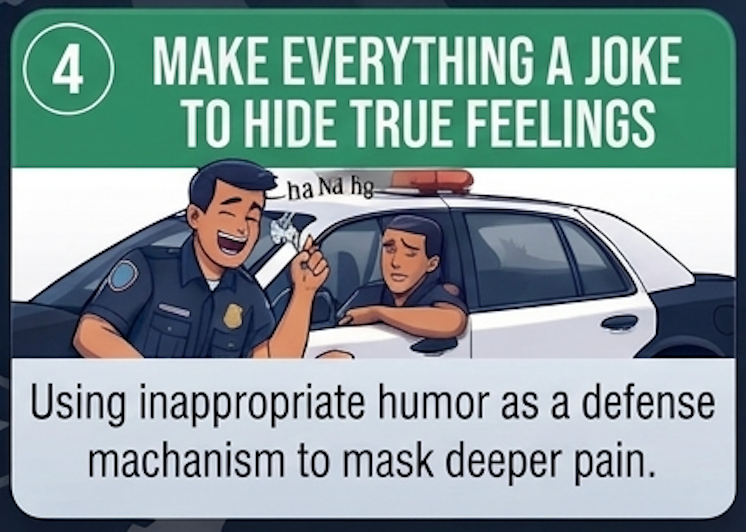
Dark humor is practically a second language in public safety.
While shared laughter can be a healthy release valve among peers, using sarcasm and jokes to deflect every serious conversation is often a defense mechanism to hide pain, fear, or vulnerability.
EI Reset: Integrity Ownership requires being honest with yourself first. EI helps you recognize when humor is being used as armor to mask deeper distress. When you drop the mask with trusted peers, Peer Support teams, or family, you open the door to real relief instead of carrying the weight alone.
5. Feeling Overwhelmed… PTS(D) Sets In
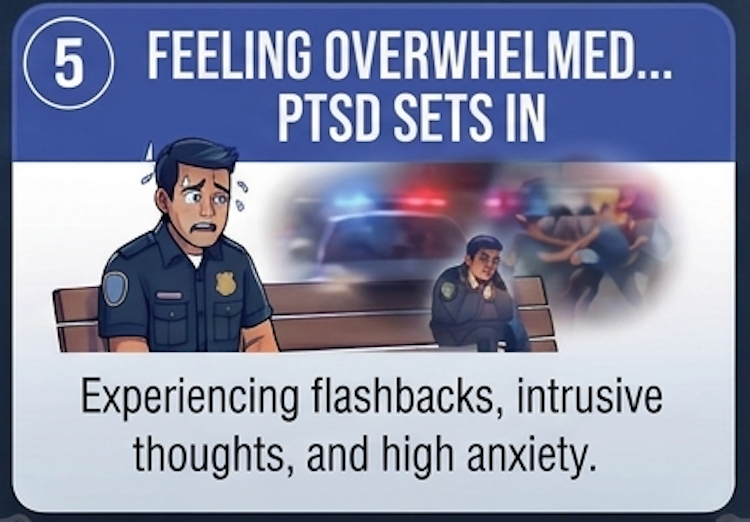
When sleeplessness, irritability, and negative thoughts become your daily baseline, overwhelm shifts into Post-Traumatic Stress (PTS/PTSD).
At this stage, logic shuts down and survival instincts take over, making everyday tasks feel impossible.
EI Reset: Emotional Intelligence acts as an early-warning radar and a lifeline. Recognizing that PTS(D) is an occupational injury—not a personal weakness—removes the stigma of asking for help. Through RITE’s mental wellness exercises, Peer Support networks, and Crisis Intervention resources, officers learn practical self-regulation techniques to calm the nervous system and seek professional or peer support before a crisis escalates.
6. Losing Yourself and Your Self-Worth
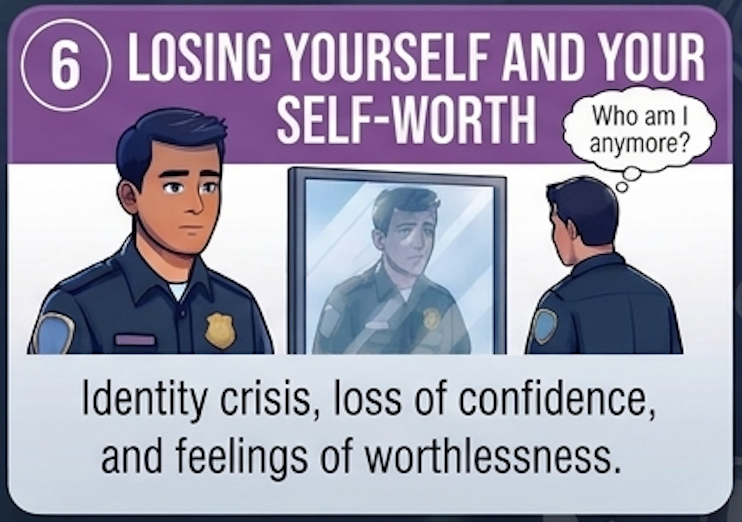
The most dangerous point in any public servant’s career is when the badge or uniform becomes your entire identity—and the stress of the job leaves you feeling hollow, cynical, or worthless.
When you feel undervalued by leadership, the public, or yourself, burnout takes complete control.
EI Reset: The RITE model is designed to help you rediscover the VALUE within yourself. When you feel better about yourself, you treat others better—both on the street and at home. By practicing daily self-awareness and gratitude, you separate who you are as a human being from what you do for a living, restoring your sense of purpose, dignity, and personal worth.
Control Your Emotions, Control the Situation
Public service demands everything you have, which is why protecting your mental and emotional wellness must be a daily priority. You don’t have to wait until you hit rock bottom to start using Emotional Intelligence.
Next Steps for Your Agency: Whether you are looking to strengthen department morale, equip your Peer Support and CIT teams, or bring hands-on RITE Tool Kits to your sworn and non-sworn personnel, RITE Academy is here to help.